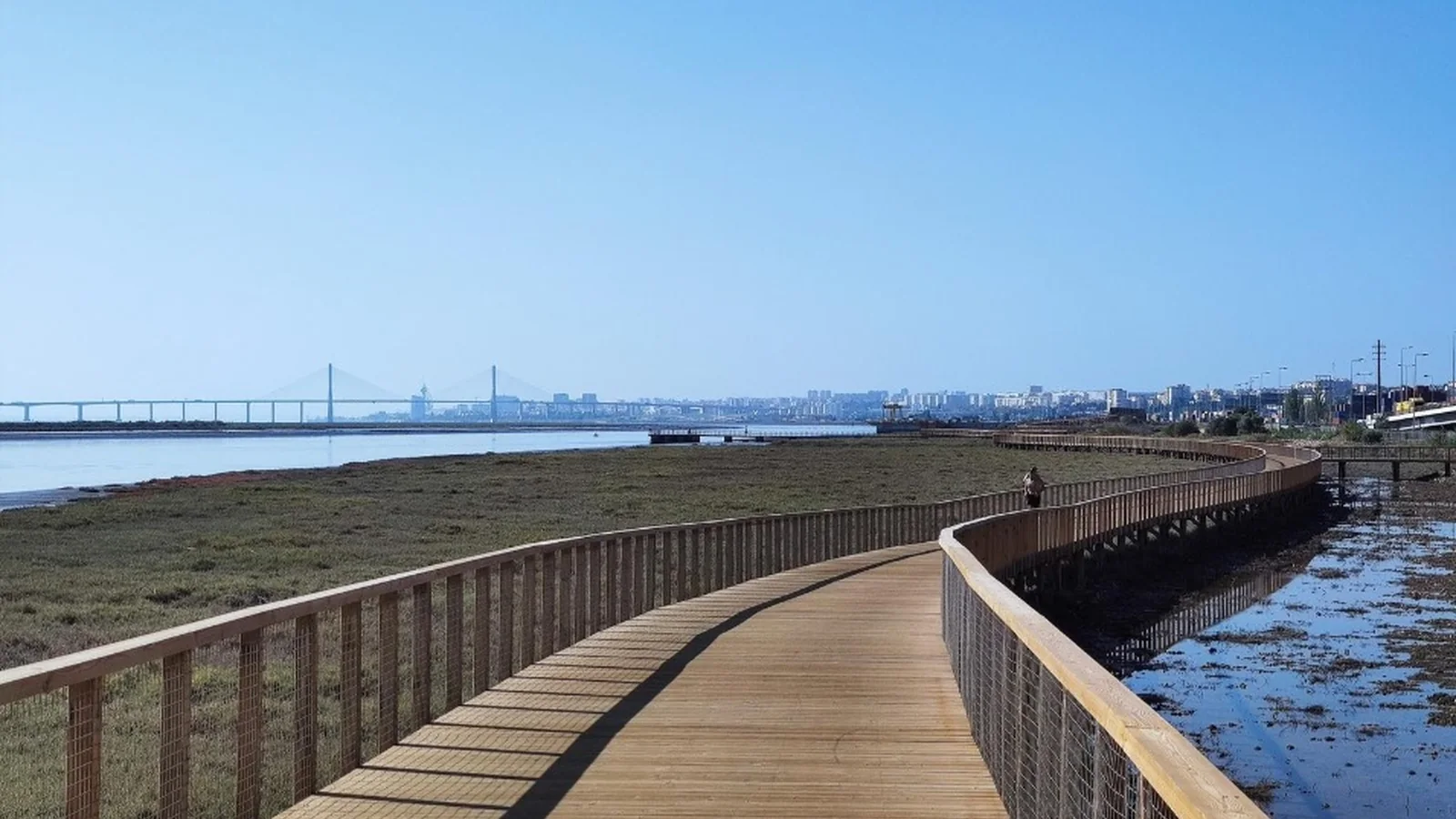
Loures Riverside Boardwalk
Helical piles in harmony with the salt marsh of the Tagus Estuary, on a route of about 6,150 m.
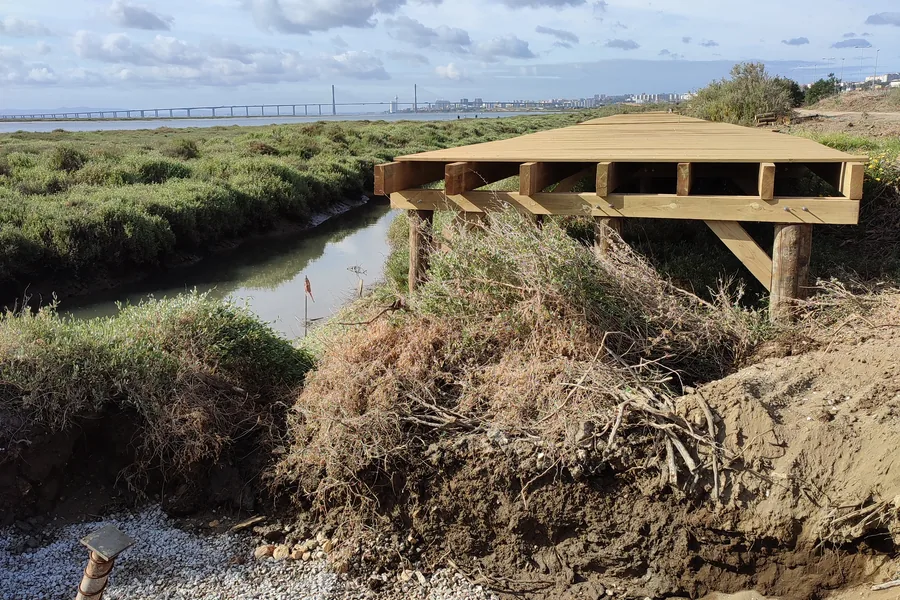
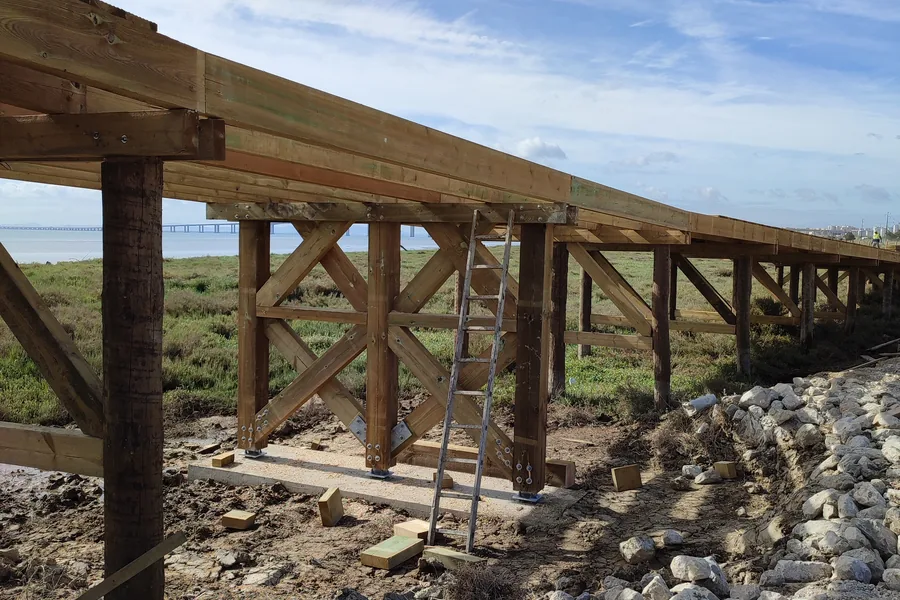
Between January and June 2023, Rotopile built the foundations for the Loures Riverside Boardwalk, a pedestrian and cycling route of about 6,150 m along the waterfront of the Tagus Estuary. The boardwalk serves the area that would soon become Pope Francis Park, the venue for the 2023 World Youth Day.
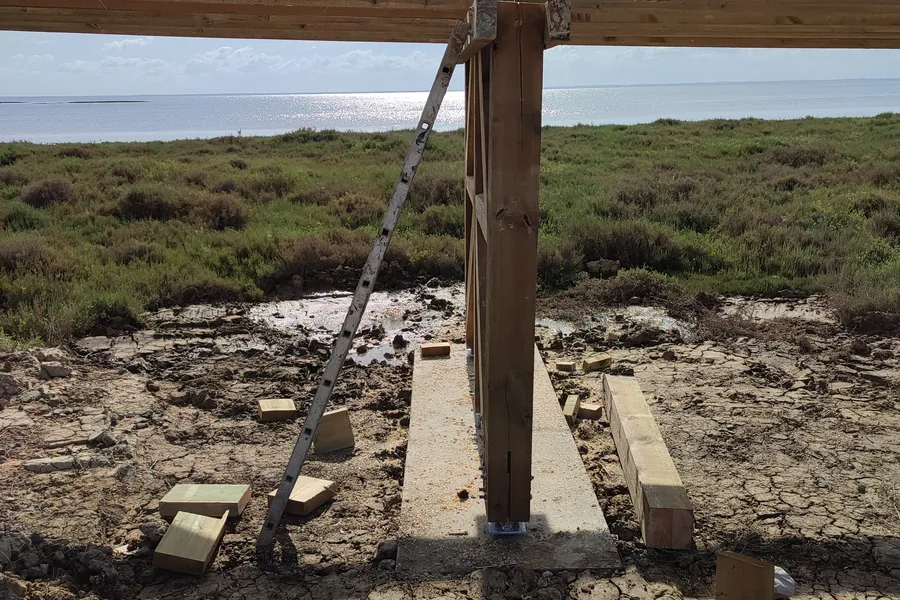
The route runs across some 36 hectares of salt marsh, one of the most important wetlands in Europe. The brief was to disturb this ecosystem as little as possible, so the boardwalk was built in timber and steel, with the least possible excavation and cast-in-place concrete. The foundation had to follow the same logic.
The ground made it harder. Beneath two metres of sandy fill came very soft clays, 13 to 33 m thick, and only between 26 and 38 m did the competent layer appear: very dense silty sands with gravel, able to carry load. Any foundation had to pass through all the soft clay to reach it.
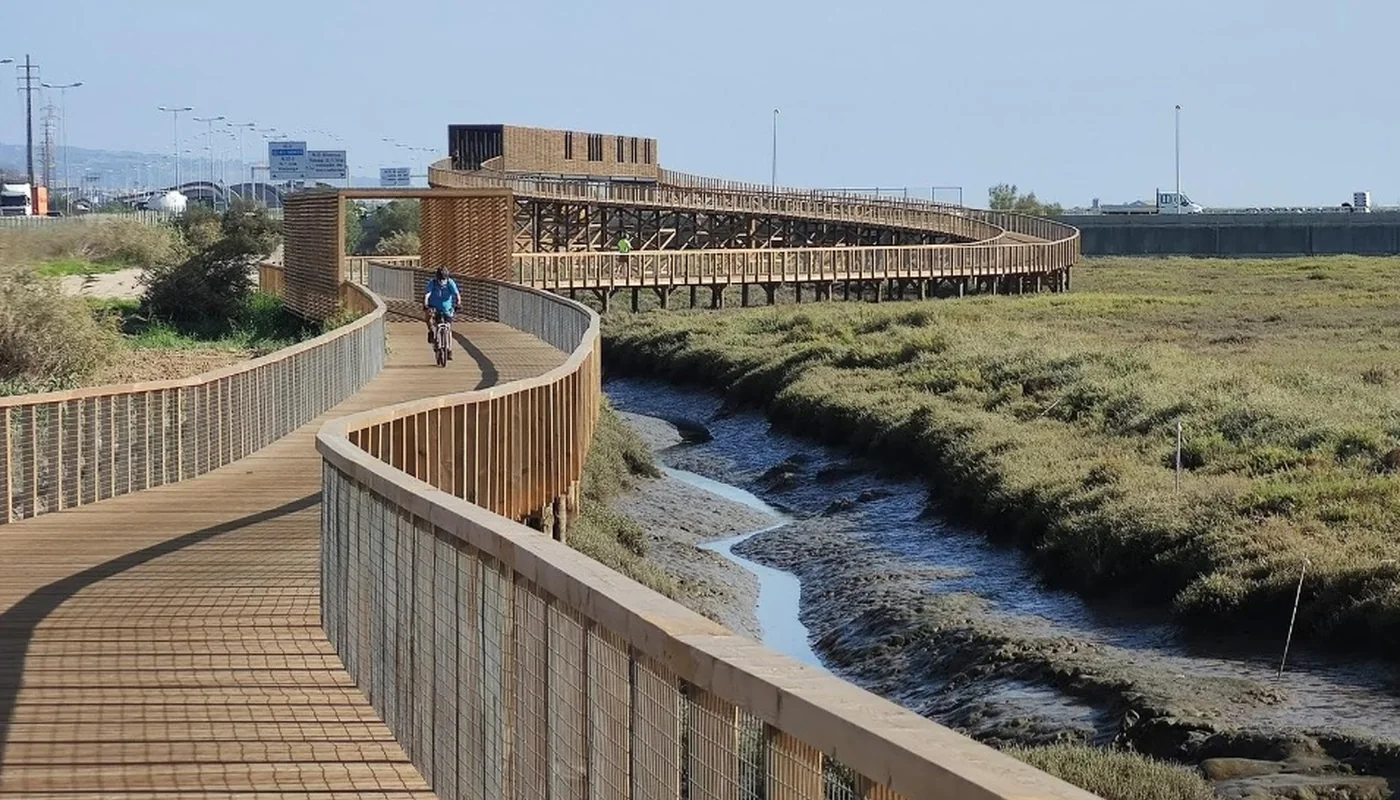
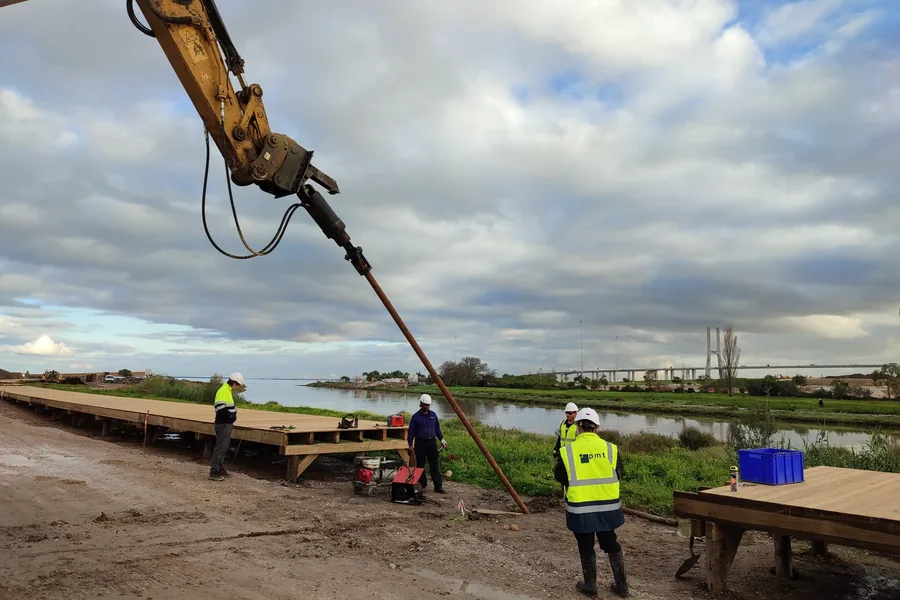
The answer combined timber piles and helical piles. The deck sits on timber piles, in eight rows of three, every four metres and about eight metres long. To brace the structure horizontally and resist the seismic loads, Rotopile PRO helical piles were added, in a Ø88.9 × 8 mm shaft with a Ø400 × 10 mm helix, driven at a 45° rake in pairs every 32 m of boardwalk. In the deepest soft-clay sections they reached 37.5 m.
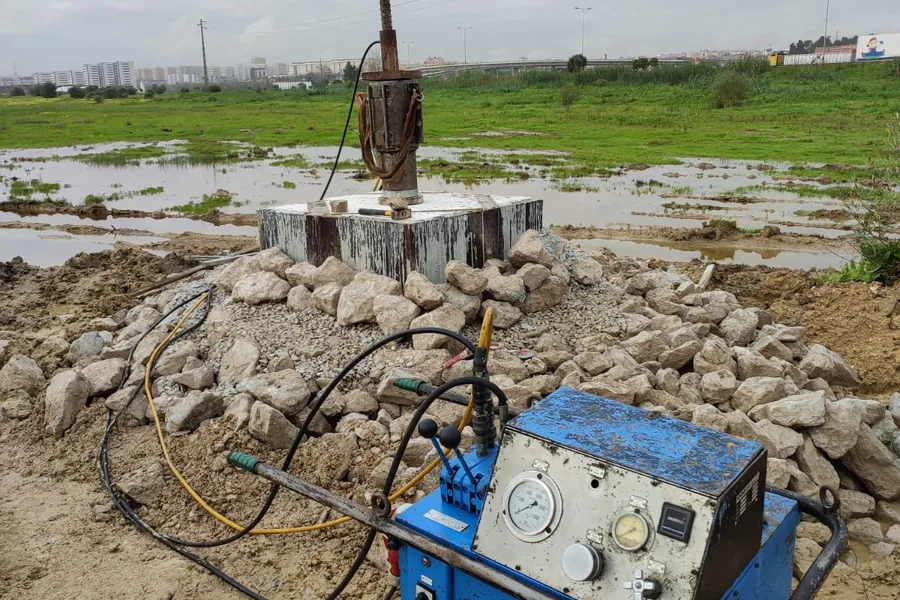
The design load was 57 kN per pile. Three load tests on vertical piles confirmed the solution with margin, above 100 kN per pile.
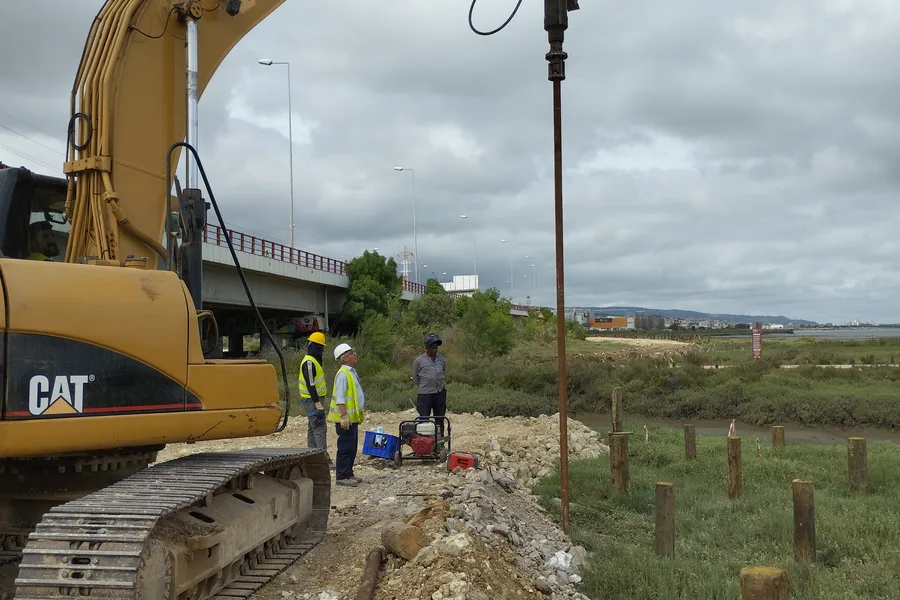
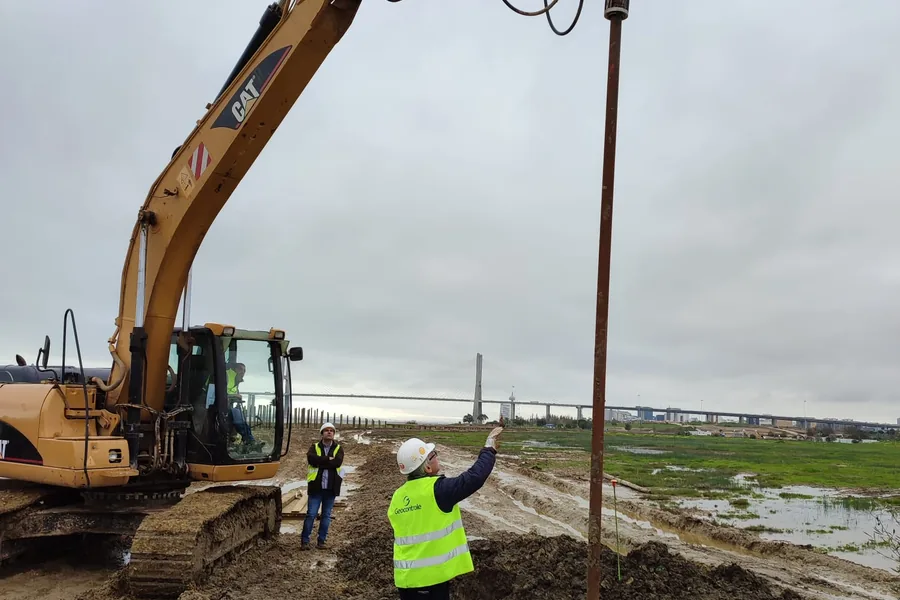
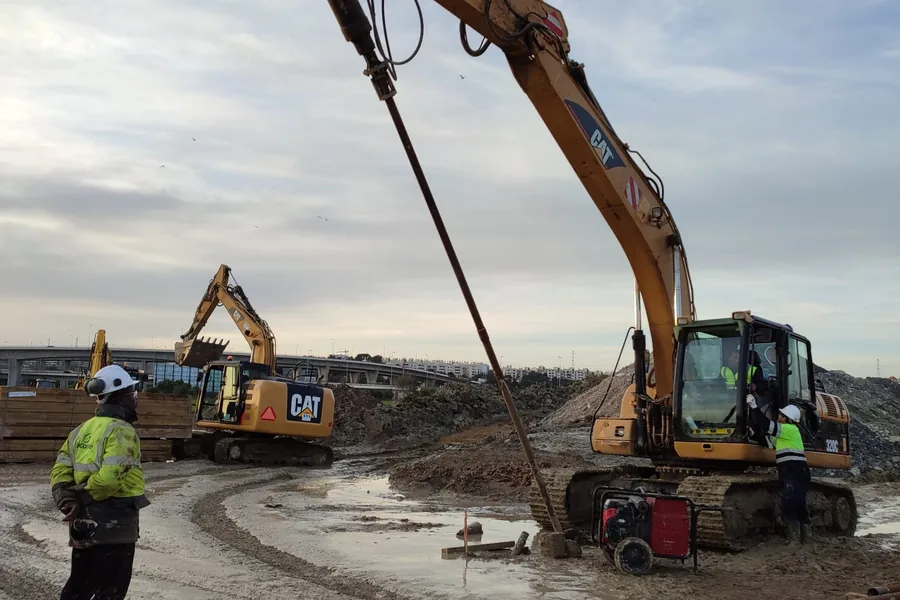
Installation used a 30-tonne excavator with a Digga D40 drive head, turning the piles in without drilling, concrete or grout. With no open bores there was no slurry or spoil to remove from the marsh, and the rate reached 180 m of pile per day. About 2,500 m of pile were driven in total, with a clear saving in time and cost.
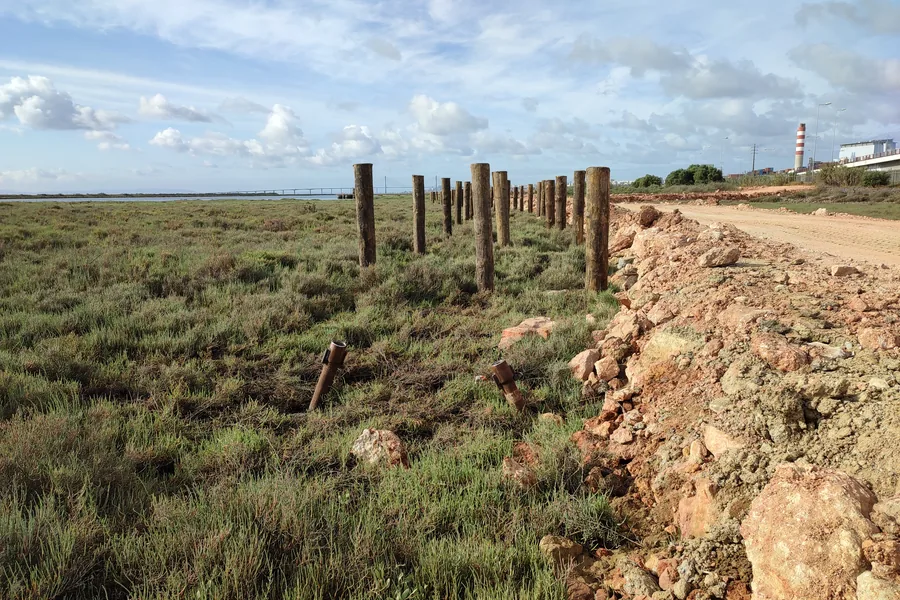
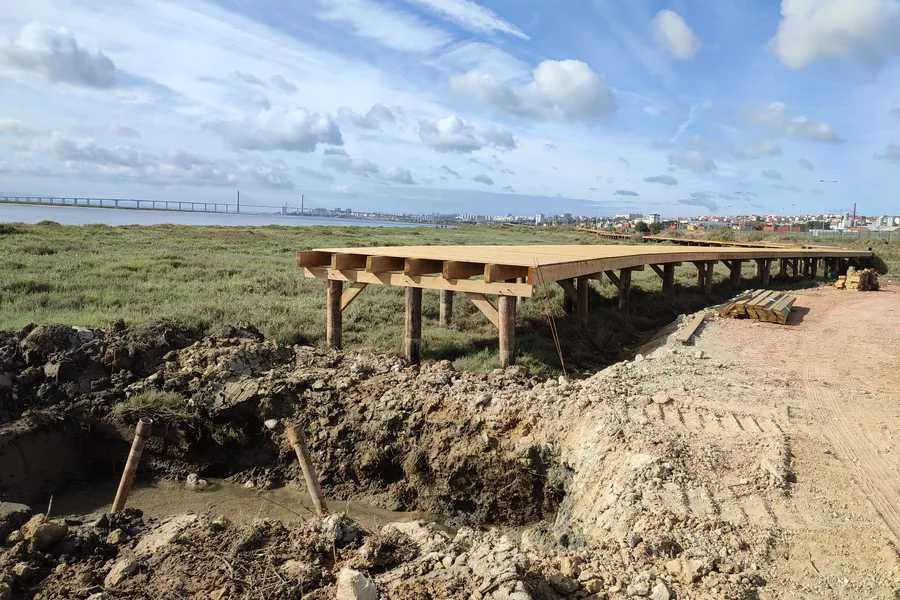
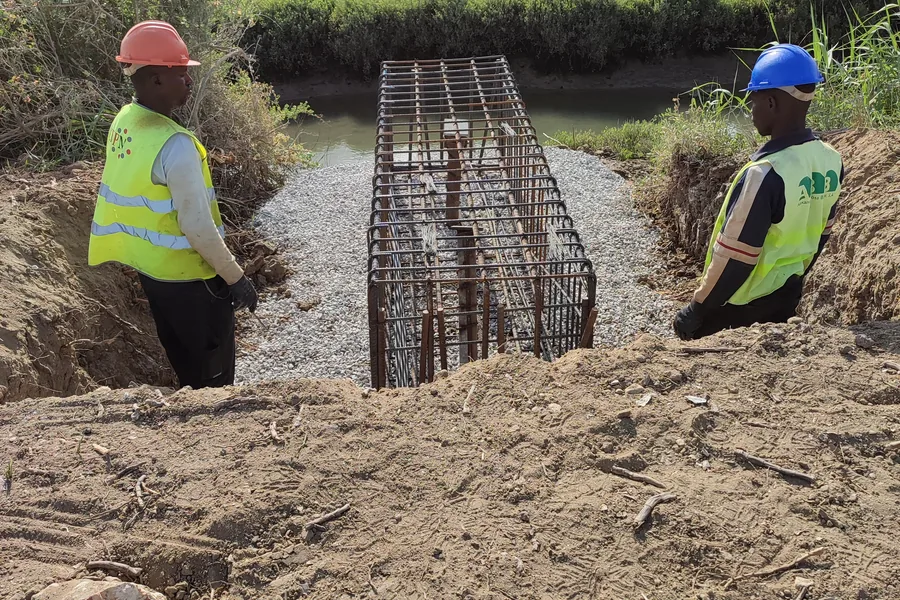
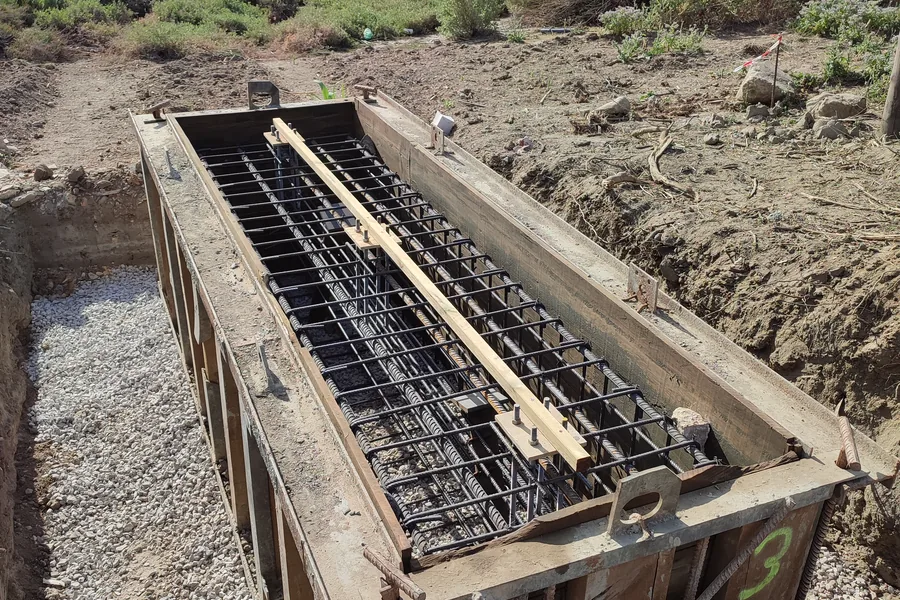
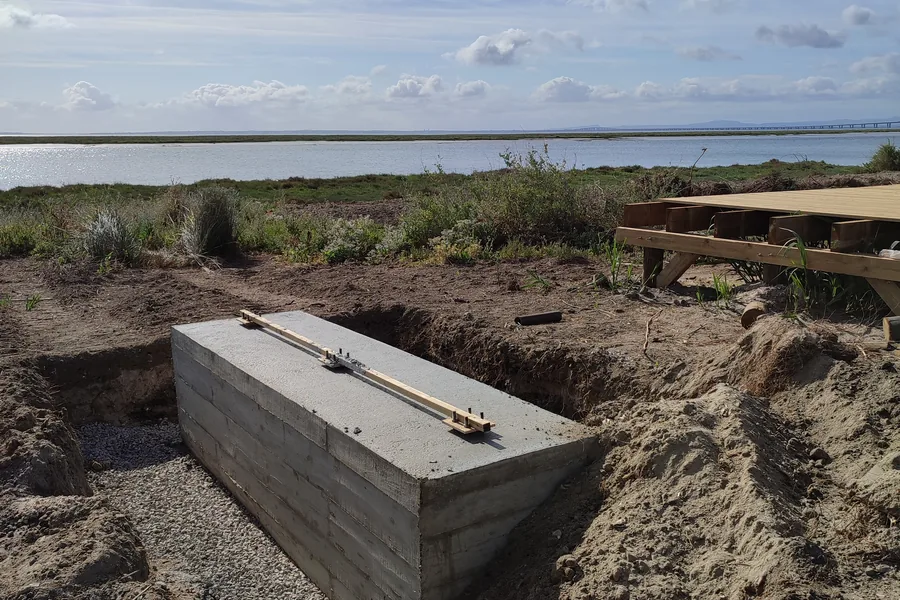
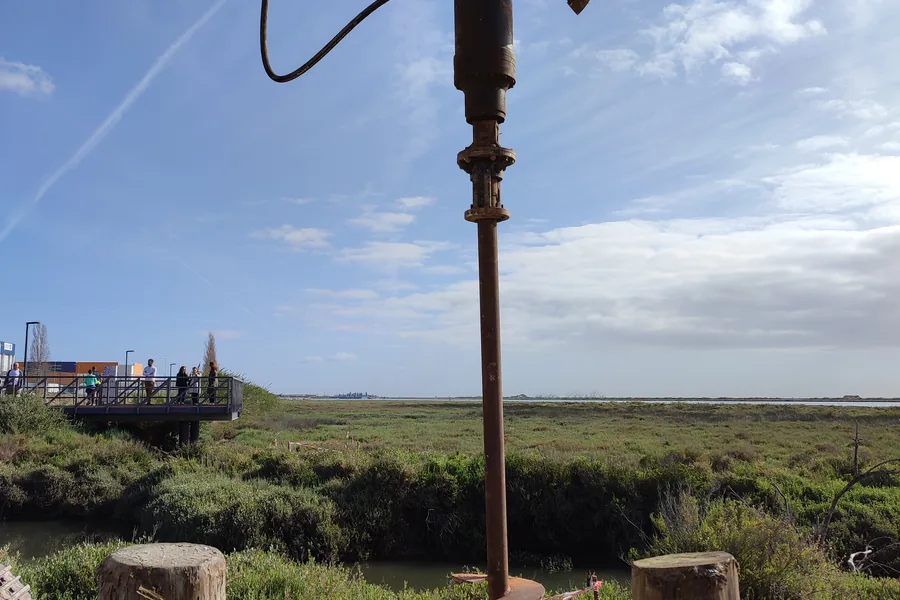
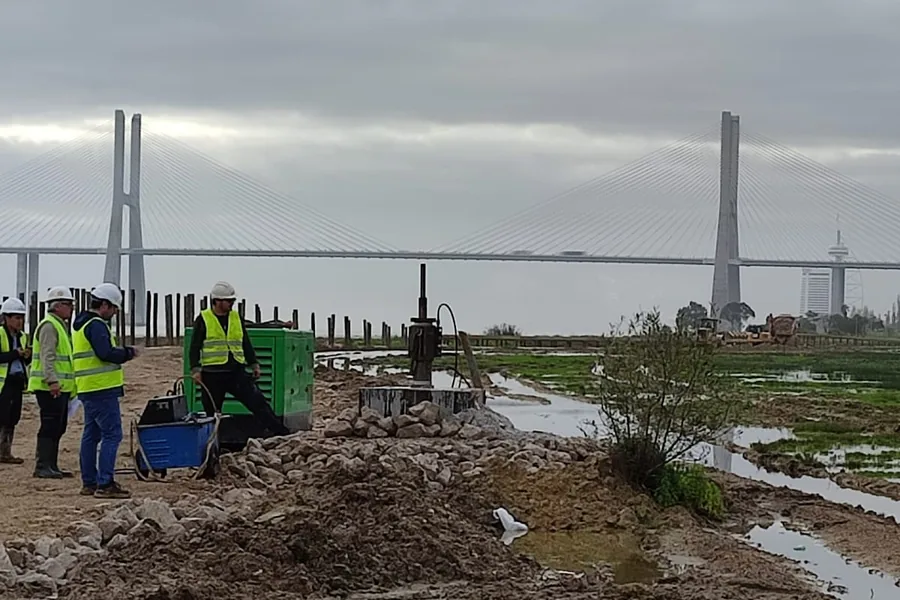
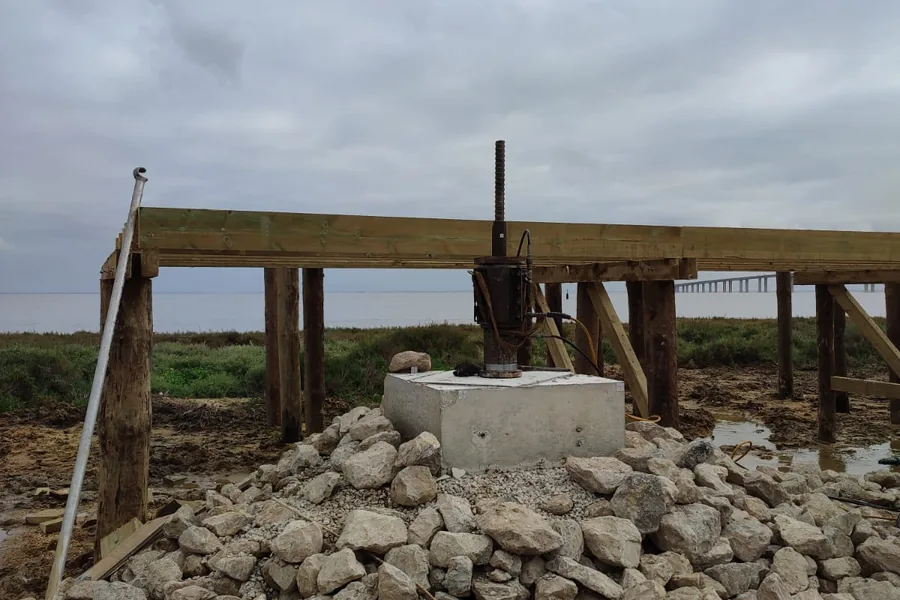
What mattered most was the environmental impact. With no major excavation, no drilling spoil and far less high-carbon material, the marsh was left almost untouched. And like any helical pile, these can one day be unscrewed, returning the site to almost exactly how it was.
218 helical piles · Ø88.9 × 8 mm with Ø400 × 10 mm helix · up to 37.5 m · ~2,500 m driven · 180 m per day · one 30 t excavator
Have a similar project?
Talk to our foundation specialist about your ground. No cost, no commitment.