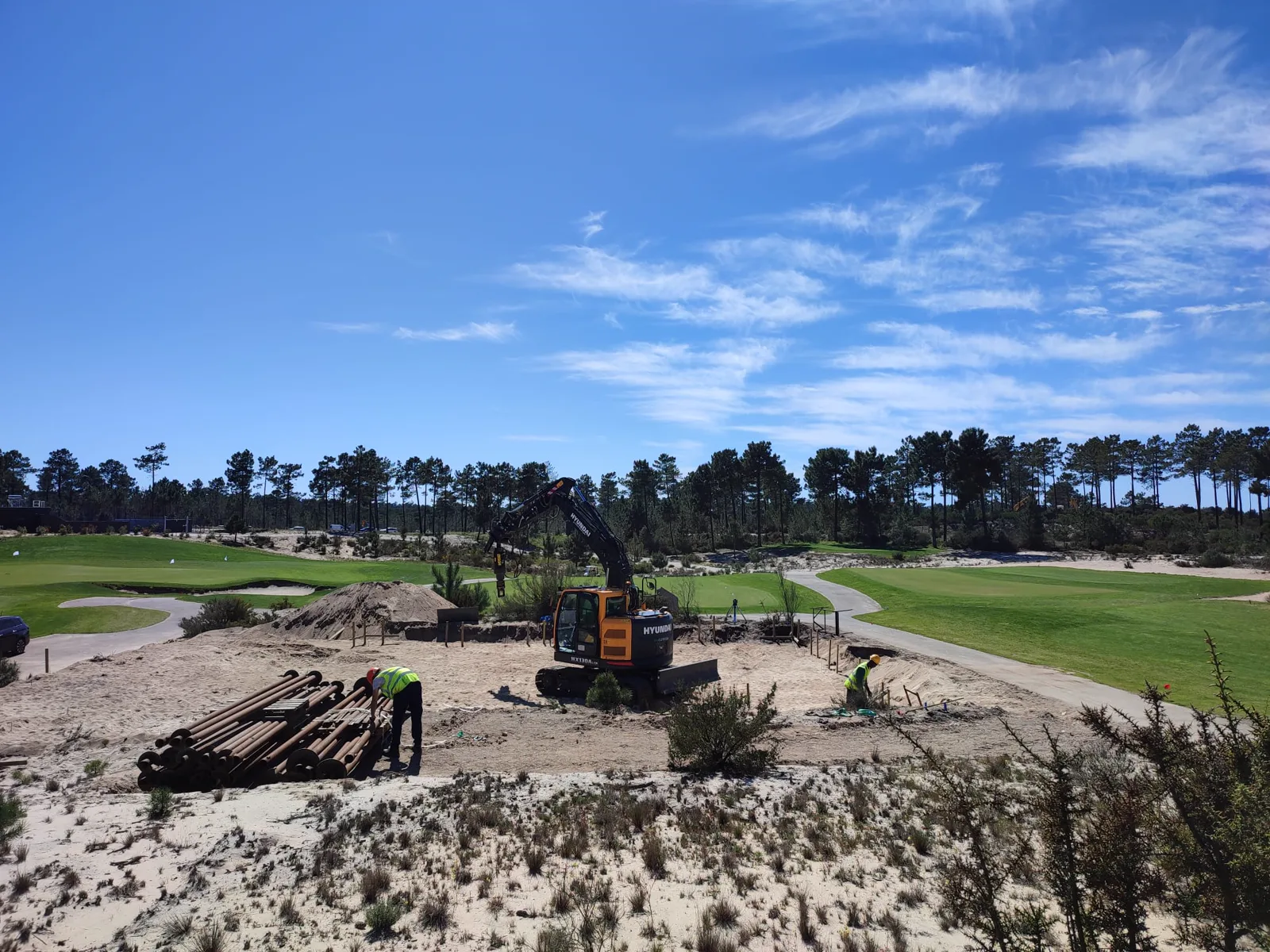
Your foundation ready in hours, not weeks
Skip the excavation, the concrete, and the curing time.
Why construction professionals choose helical piles
Three advantages that change your project economics.
Faster project delivery
No excavation, no formwork, no concrete curing. The pile is driven in, carries load immediately, and your build starts the same day.
Lower total foundation cost
No frost insulation, no drainage, shorter piles that reach capacity at shallower depths. Fewer work phases, fewer invoices.
Lower CO₂ emissions
Zero concrete eliminates the single largest carbon source in foundation work. Steel, fully removable, fully recyclable.
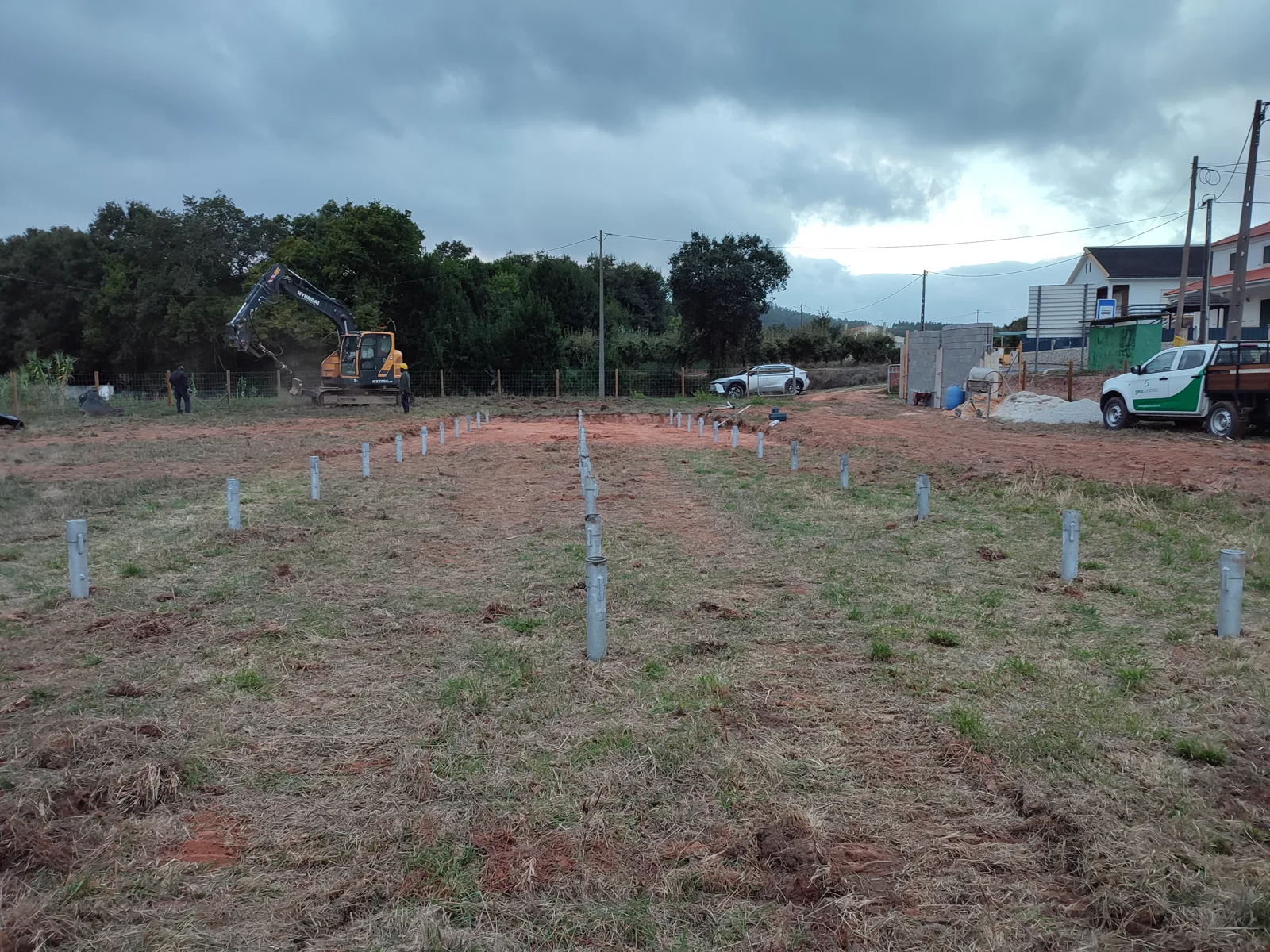
How your options compare
Most foundation decisions are still made out of habit. Concrete has been the default for so long that many project teams never stop to compare. Here is how the options stack up.
| Factor | Helical piles | Concrete foundations |
|---|---|---|
| Excavation & haulaway | None required | Extensive earthworks + soil disposal off-site |
| Soft soil (peat, clay) | Installs directly, no soil replacement | Often requires costly soil replacement |
| Drainage | Not required | Typically required |
| Frost insulation | Not required | Typically required |
| Work steps | Single operation: screw into ground | Excavation, formwork, reinforcement, pouring, curing, backfill |
| Installation time | Hours to days | Weeks (excavation + formwork + reinforcement + curing) |
| Weather dependency | Installs year-round in most conditions | Concrete cannot be poured in freezing conditions |
| Noise & vibration | Minimal noise, no ground vibration | Heavy machinery on site |
| Load-bearing | Immediately after installation (torque-verified) | Requires curing period (typically 28 days for full strength) |
| Load direction | Compression and tension (both directions) | Primarily compression |
| Removability | Fully removable and reusable | Permanent, removal requires demolition |
| Environmental impact | Recyclable steel, no excavation waste, smaller footprint | Higher material consumption, excavation waste |
| Factor | Helical piles | Driven steel piles |
|---|---|---|
| Site preparation | Compact equipment, minimal site prep needed | Heavy rigs require prepared access roads and working platforms |
| Equipment | Standard excavator or handheld drill (HELIX) | Specialised heavy piling rig required |
| Noise & vibration | Minimal noise, no ground vibration | Significant impact noise and ground vibration |
| Residential areas | No disturbance to neighbours | Significant noise and vibration disturbance |
| Night work | Quiet operation allows night-time installation | Noise levels prevent night-time work |
| Nature & nesting areas | Low-impact, suitable near protected areas | Not suitable near nature reserves or nesting sites |
| Pile length | Shorter: helical flange reaches capacity at shallower depth | Longer piles needed to achieve same capacity in loose soils |
| Material usage | Less steel per pile, lower transport and material cost | More steel required, higher material and logistics cost |
| Tension / uplift | Excellent uplift resistance thanks to helical flange | Poor tension and uplift resistance |
| Removability | Fully removable and reusable | Permanent, extraction is destructive and costly |
| Environmental impact | Less material, smaller footprint, recyclable | More material consumption, higher carbon footprint |
| Factor | Helical piles | CFA piles |
|---|---|---|
| Equipment | Standard excavator or handheld drill (HELIX) | Heavy CFA rig and concrete pump |
| Site preparation | Compact equipment, minimal site prep | Access roads, working platform, concrete delivery logistics |
| Work steps | Single operation: screw into ground | Auger drilling, concrete pour as auger withdraws, reinforcement cage insertion |
| Concrete requirement | None | Every pile is cast in-situ with concrete |
| Installation time | Hours to days | Days to weeks (including curing) |
| Load-bearing | Immediately after installation (torque-verified) | Only after concrete curing (typically 7-28 days) |
| Capacity verification | Real-time torque measurement during installation | Integrity testing and load test after curing |
| Weather dependency | Installs year-round in most conditions | Concrete cannot be poured in severe frost |
| Noise & vibration | Minimal noise, no ground vibration | Rig noise, concrete truck traffic on site |
| Soft & challenging soils | Installs through soft soil layers to reach bearing stratum. No bore stability concerns. | Bore collapse risk in soft soils and high water table. Uncontrolled concrete overbreak increases material cost. Often requires casing support. |
| Tension / uplift | Excellent uplift resistance from helical flange | Limited tension capacity without additional anchoring |
| Material usage | Steel only, no concrete | Steel reinforcement cage + concrete per pile |
| Quality assurance | Torque log per pile, immediate verification | Dependent on concrete quality, curing conditions, bore stability |
| Removability | Fully removable and reusable | Permanent, cannot be extracted |
| Tight access sites | Compact equipment reaches confined spaces | Large rig footprint, limited manoeuvrability |
| Environmental impact | Recyclable steel, no excavation waste, smaller footprint | Concrete + steel, spoil arisings, larger carbon footprint |
| Factor | Helical piles | Ground screws |
|---|---|---|
| Capacity verification | Torque-to-capacity correlation gives real-time verification during installation | No established torque correlation; capacity typically requires individual load testing |
| Tension / uplift | Engineered for both compression and tension thanks to helical bearing plate(s) | Limited pullout resistance from shaft friction only; not engineered for structural tension loads |
| Load range | From light structures up to 1,000+ kN per pile (PRO series) | Typically under 100 kN |
| Frost heave resistance | Helix installed below frost line; slim shaft through frost zone minimises adfreeze | Short ground screws often sit entirely within the frost zone in northern conditions |
| Extendability | Bolt-on extensions to reach the required depth | Fixed length, not extendable |
| Corrosion protection | Hot-dip galvanised per EN ISO 1461, traceable structural steel | Varies by manufacturer: electroplating, paint, or hot-dip galvanising |
| Helix / plate diameter | True helical bearing plates engineered to the load | Small threads or flanges |
| Installation documentation | Per-pile torque log, capacity data, full traceability | Typically no per-unit installation documentation |
| Standards & design | Manufactured under EN 1090, design per EN 1997, coating per EN ISO 1461 | Varies by manufacturer; some hold product-specific approval with design tables |
| Typical applications | Buildings, industrial halls, infrastructure, solar parks, masts | Fences, carports, small decks, signs, small-scale solar |
Where your project fits
From garden sheds to solar parks.
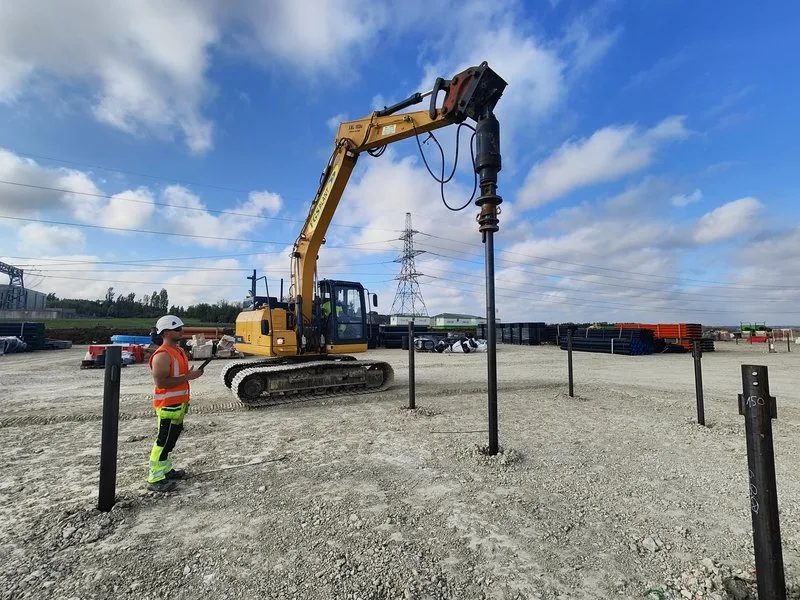
Buildings and Industrial
- Load capacity up to 1,000 kN
- No excavation, no soil replacement, no formwork
- Load-bearing immediately after installation
- Faster schedule, lower site costs
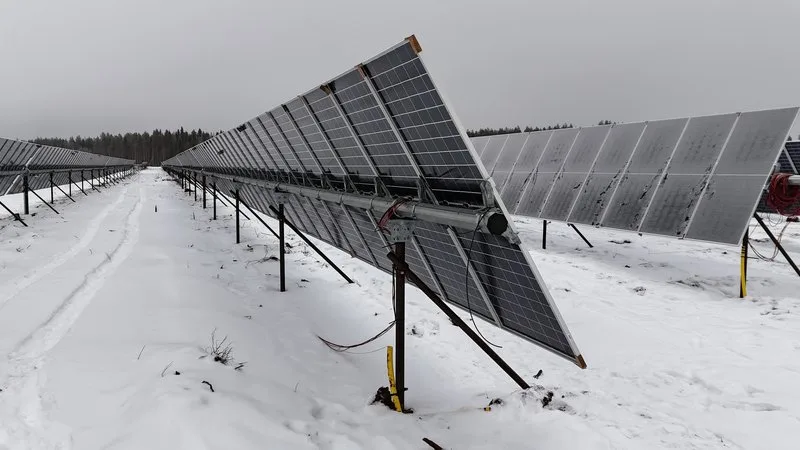
Energy and Utility Infrastructure
- Compatible with fixed-tilt and tracker racking
- Mass installation: hundreds of piles per day
- Capacity verified during installation
- 78% lower carbon footprint than concrete
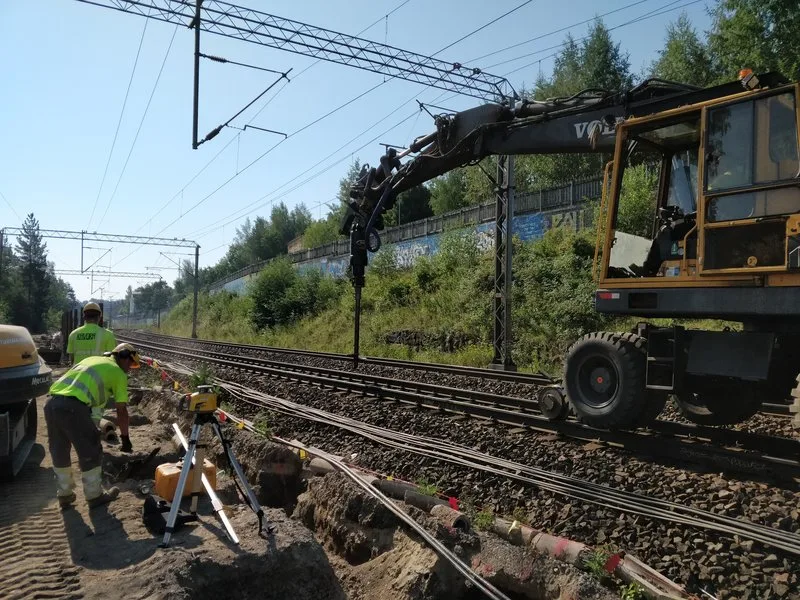
Road, Rail and Transport
- Install alongside live traffic, no trenches
- Vibration-free next to existing structures
- Short traffic closures, fast single-pile install
- Silent installation, can work at night
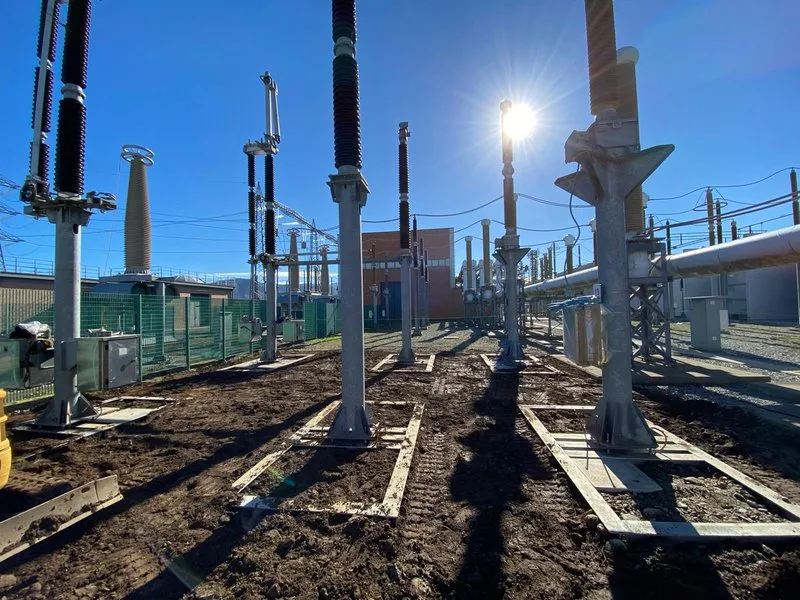
Technical Structures
- Single foundation ready in minutes
- Millimetre-accurate positioning
- Right-sized foundation, no over-engineering
- Relocatable, no demolition waste
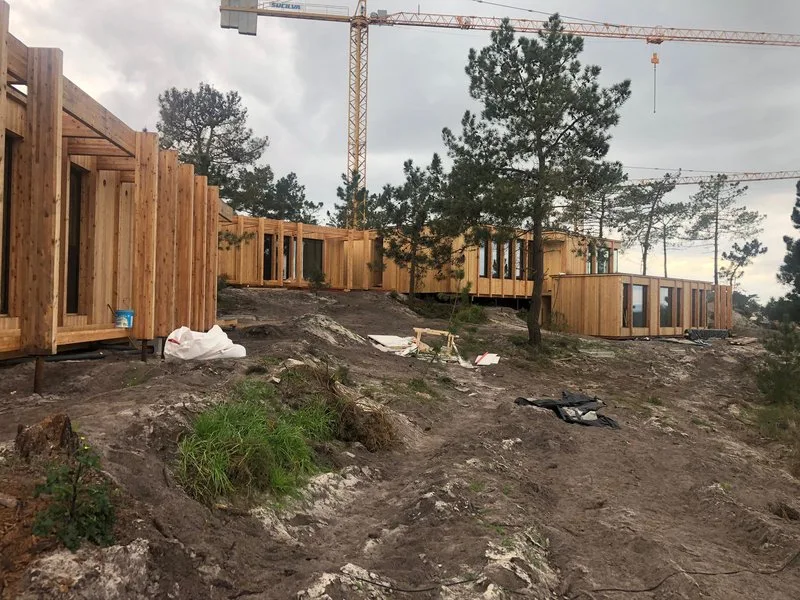
Residential Construction
- Your garden and lawn stay intact
- Build immediately, no curing time
- HELIX piles suitable for DIY installation
- Often more cost-effective than concrete
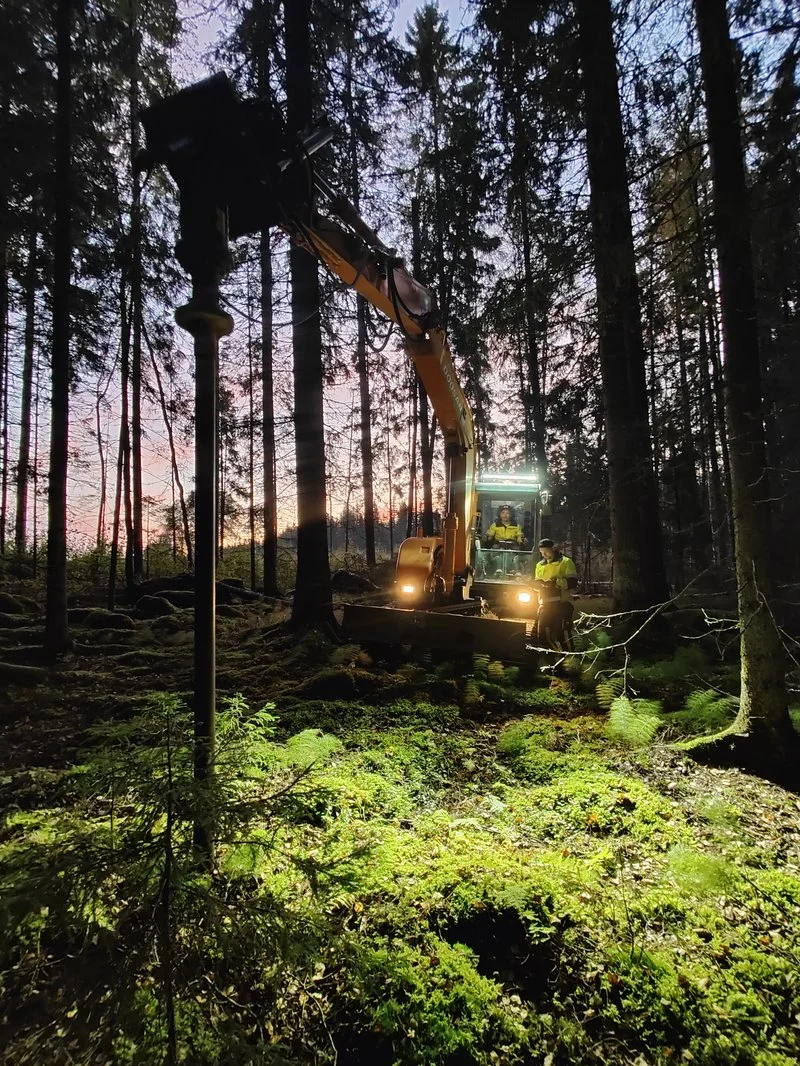
Challenging and Sensitive Sites
- No excavation, no concrete, no trace
- Works even in soft soil conditions
- Fully removable, site returns to original state
- Install with compact equipment in tight spaces
Built to European standards
Every helical pile you receive from Rotopile is manufactured in Portugal and Finland under EN 1090, available in two steel grades of your choice (S355/S420 structural and S550 high-tensile), and documented to meet European structural certification requirements.
More than the certificate on the wall