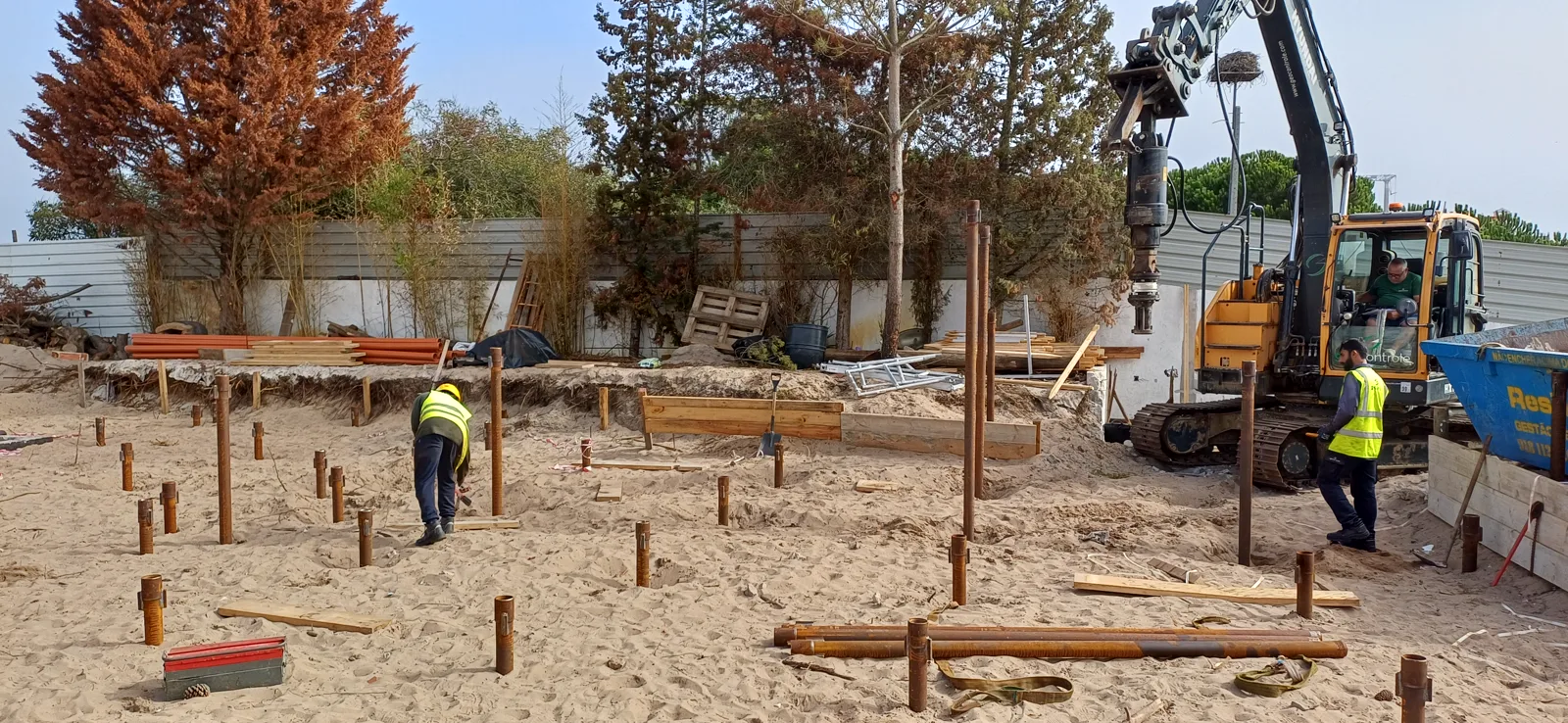
CLT House at Lagoa Formosa
Helical pile foundations on dune sand, in Carvalhal, Grandola.
In October 2025, Rotopile built the foundations for the house on Plot 5 of the Lagoa Formosa development, in Carvalhal. The house is built entirely in timber, in CLT, and the foundation had to follow suit: the least possible disturbance to the ground and a low carbon footprint.
The site is dune sand. Under a surface layer of loose sand with organic matter and poor bearing for shallow foundations, the geotechnical survey found medium-dense sand to about 4 m, sand with more organic matter between 4 and 7 m, and dense to very dense sand below. Only these deeper layers could take the house loads, and the water table was around 7.5 m.
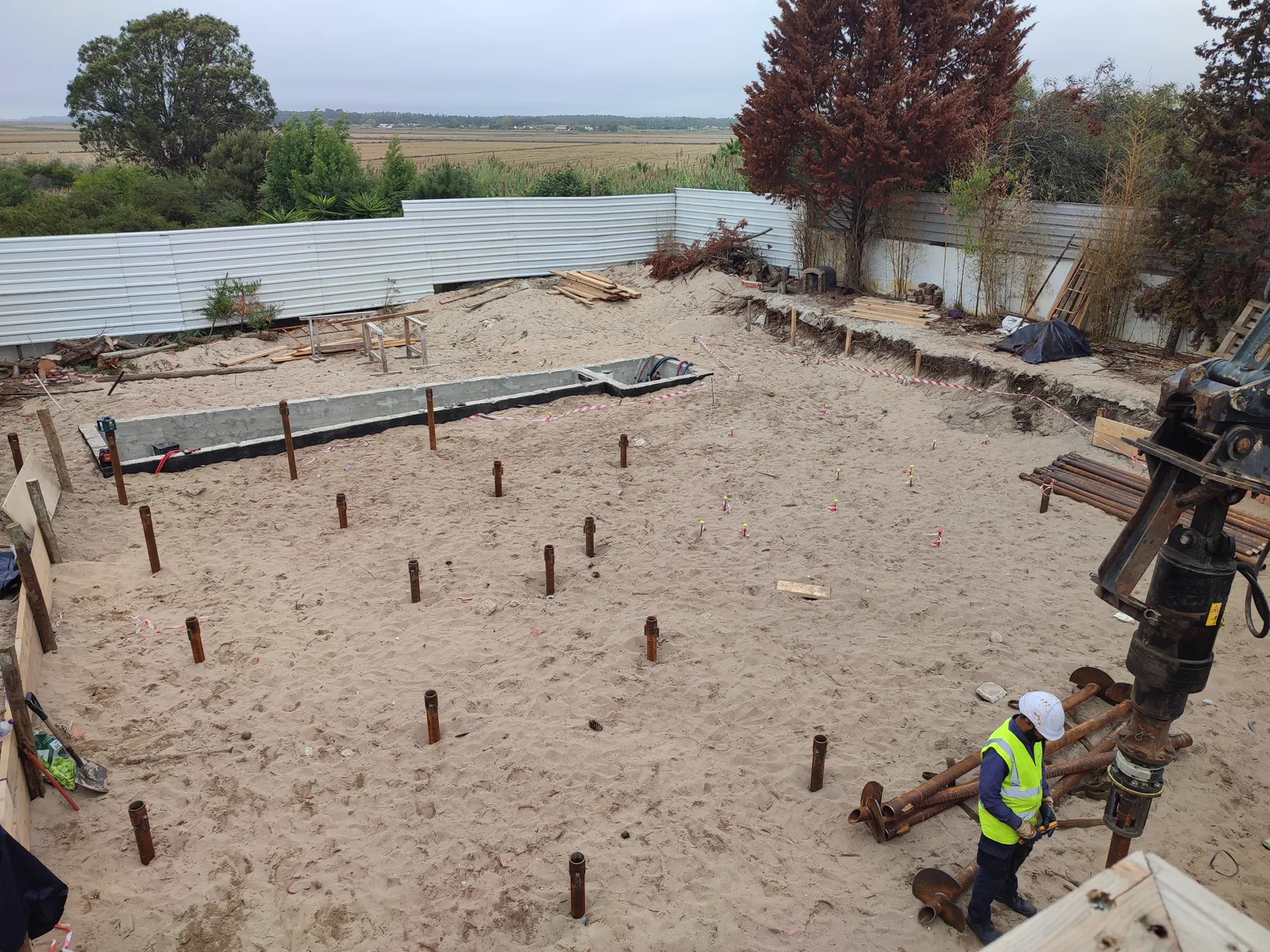
The project allowed helical piles, conventional piles or micropiles. The choice was 69 Rotopile PRO helical piles, in Ø88.9 × 8 mm shaft with a Ø400 × 10 mm helix, designed for 100 kN each, carrying the timber structure down to the dense sand. Driven by rotation, with no soil removed and no open bores, the water at 7.5 m did not hold up the work: no dewatering, no bore walls to stabilise.
Installation used a 16-tonne excavator with a Digga D50 drive head, no drilling, no reinforcement, formwork or concrete pours, and no excavation spoil. Against concrete or micropiles, the solution cut the lengths, the material and the time on site.
The bigger gain, though, was environmental. With no major excavation and no invasive work, the ground stayed almost untouched, with a carbon footprint well below the conventional options, in keeping with the CLT build. And there is an advantage few foundations have: the piles are reversible. If ever needed, they unscrew from the ground and the site returns almost to its original state.
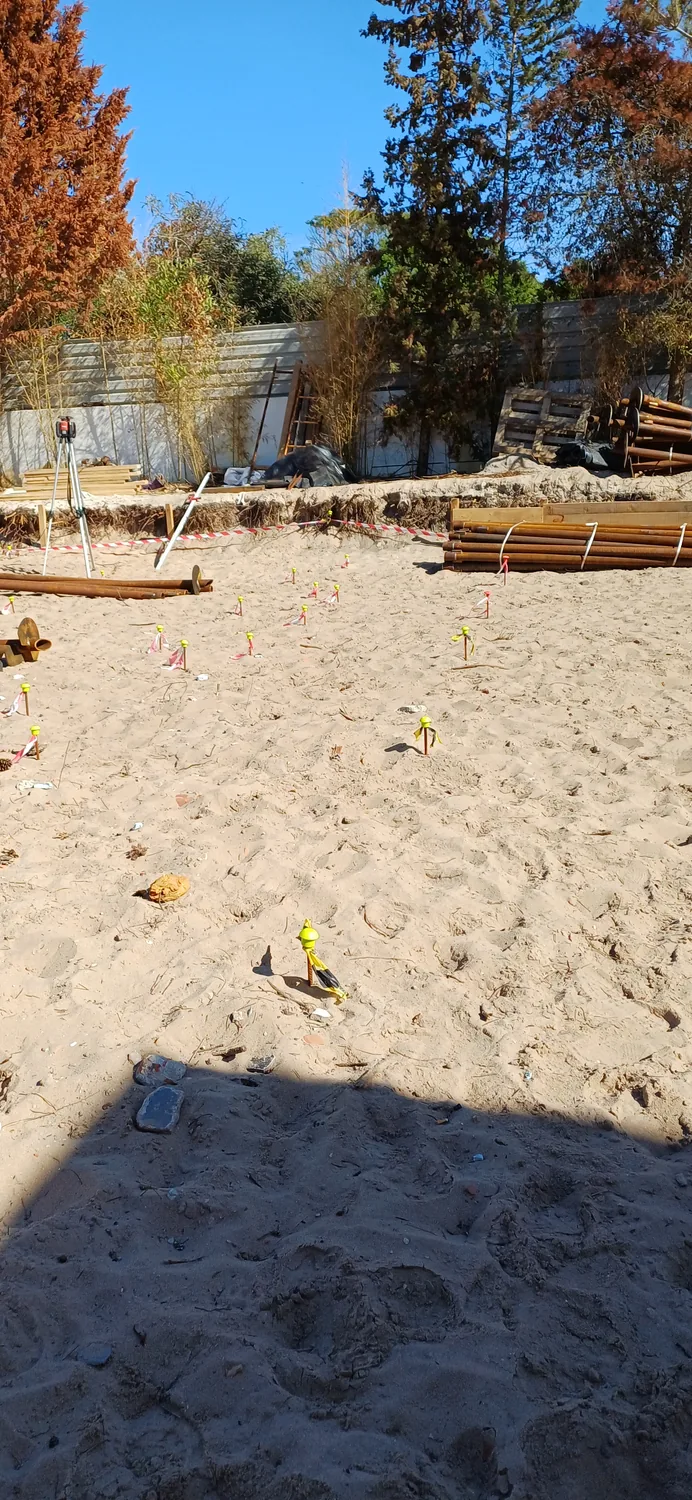
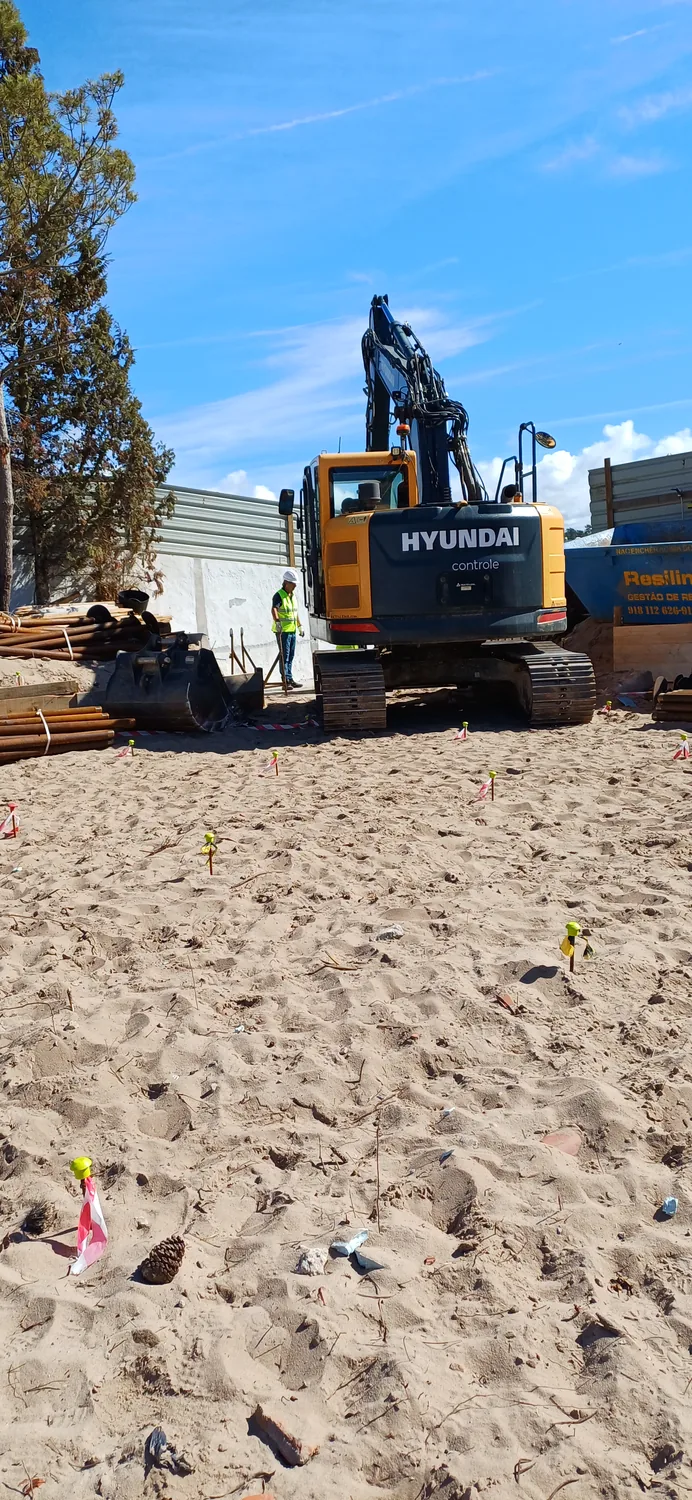
69 helical piles · Ø88.9 × 8 mm with Ø400 × 10 mm helix · 4.6 to 6 m long · 100 kN per pile · one 16 t machine
Have a similar project?
Talk to our foundation specialist about your ground. No cost, no commitment.